
Startups are built when the founders have the ability to see cracks where others see walls, and the willingness to test whether those cracks are real. One such story is of the “blue boxes”.
Steve Jobs didn’t start Apple by building computers. The story began much earlier.
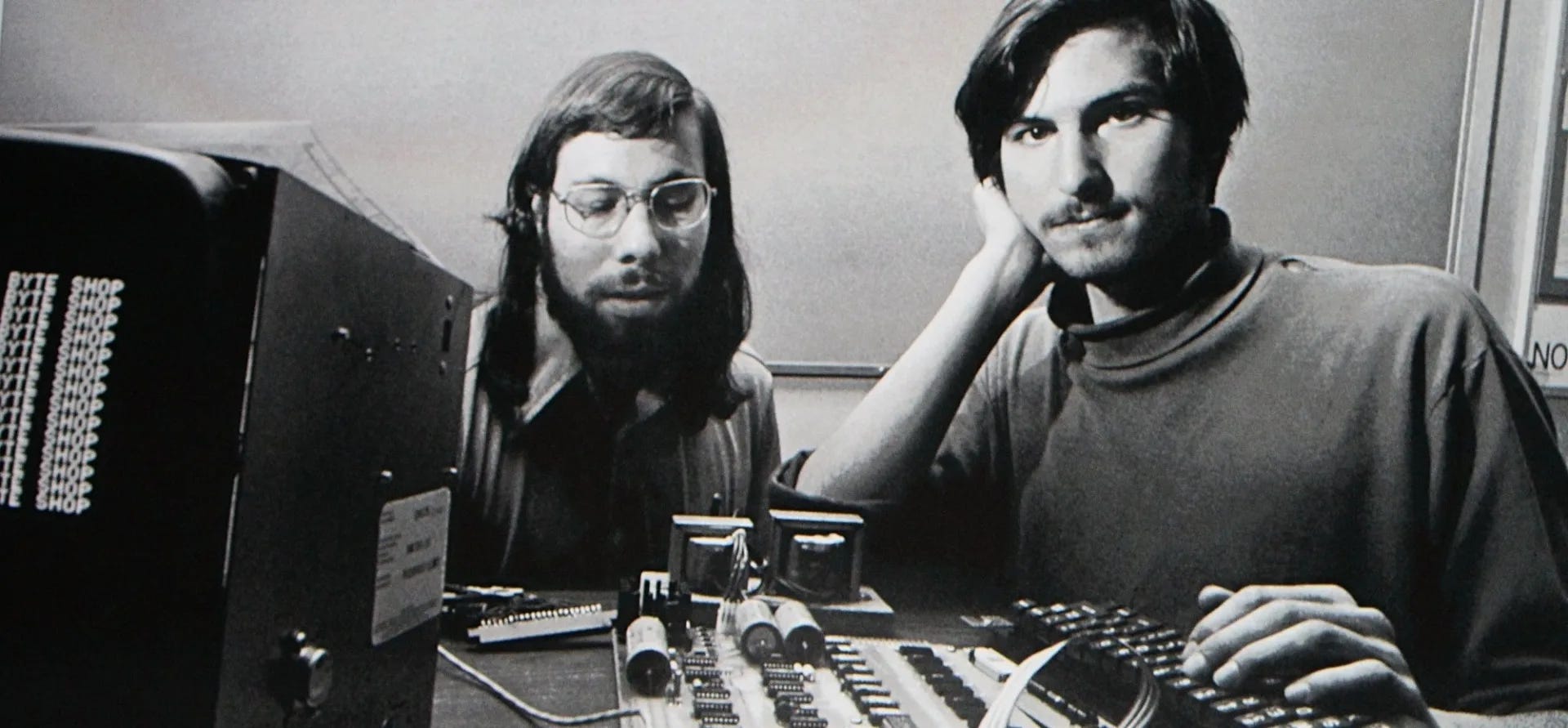
Before Apple, Jobs & Wozniak (founders of Apple) discovered something strange about phone calls.
At the time, phone networks used specific tones to control how calls were routed. Those tones traveled on the same line as the human voice. Which meant: if you could recreate the right sounds, you could control the entire phone network.
Long-distance calls were incredibly expensive back then. Adjusted for inflation, a call from New York to London could cost more than $25 per minute. They built this device, known as the “blue box” together. It would emulate those sounds, and trick the system into the system into routing any call, for FREE! It worked. They even dialed the Pope in Vatican with it.
But the free calls weren’t the point. What’s important is why they built it.
They weren’t trying to save money on phone calls. They didn’t even care much about calling people.
What excited them was the realisation that infra worth billions of dollars, run by one of the most powerful companies in the world (AT&T) could be outsmarted with about $40 worth of parts.
Steve Jobs himself shared sometime later, “if we hadn’t have made blue boxes, there would have been no Apple”. and probably no pixar. no toy story, finding nemo or wall-e.
why is this story remembered?
This story isn’t about breaking rules, it’s about a shift in thinking. Or maybe, understanding the system better than the system expects you to.
If you ever apply to Y Combinator (a top-tier startup accelerator), one thing they ask every applicant is
> Please tell us about the time you most successfully hacked some (non-computer) system to your advantage.
it’s purpose is not to see if you’re willing to do something illegal. neither it is to see if you’re a “whatever it takes” kind of person.
Paul Graham once wrote:
We're looking for people who like to beat the system. So if the answer to this question is good enough, it will make me go back and take a second look at an application that otherwise seemed unpromising. In fact, I think there are people we've invited to interviews mainly on the strength of their answer to this question.
This is it. Stories like the blue box aren’t celebrated because of what was built. Neither are they promoting illegal ways of making money.
They matter because of what they reveal about the people who built them. They show a certain way of seeing the world. Some people look at systems and see rules. Others notice the assumptions underneath those rules.
That difference is subtle and it’s easy to miss. But it shows up again and again in the people who go on to build meaningful things.
the signals exploits create
When people exploit loopholes, it usually means 3 things came together.
First, they noticed something most people ignore. It’s their curiosity that led them here. They paid attention long enough to understand it’s workings, and came to realise a way that it can possibly be fooled, tricked or misused.
Second, they didn’t stop at their thoughts. They had the patience to follow that curiosity & to test whether their mental model was actually right, by building, tinkering & obsessing. It took Jobs & Woz six months of discovery to figure out how to build the blue box.
Third, they had the courage to actually run their exploit. To make it work on systems that were built by spending millions or billions.
When this happens, it reveals how a person thinks when no map exists.
it’s not just apple.

Mark Zuckerberg's first notable project wasn't Facebook. It was Facemash, built in one night in his Harvard dorm room in 2003.
Harvard had student photos and info stored in their digital directories, but locked. Zuckerberg noticed the security wasn’t sophisticated, so he wrote a script that pulled photos from house websites and built Facemash - a site where you could compare two students and vote on who was more attractive.
He launched it at 8pm. By midnight: 450 visitors, 22,000 photo views. By morning, Harvard’s network was overloaded. The administration shut it down.
But in those few hours, he’d proven something: people were hungry to see and interact with each other online.
The university had spent years carefully controlling access to student information. Students actually wanted the opposite.
Four months later, he launched “TheFacebook.” Same insight, different execution. This time legally. :)
The blue box moment was Facemash showing that the gatekeeping wasn't what students wanted at all!
there are 100s of stories like this, with Airbnb, Uber, Stripe, Napster, Reddit & all with their “blue box” moments.
and the industry cares.
The startup ecosystem: VCs, founders, early believers value these signals because startups are built almost entirely in unmapped territory.
There are no instructions, no precedents, and no guarantees.
The people who thrive are the ones who’ve already proven they can spot cracks, validate them fast, and push through resistance.
In a world of uncertainty, the ecosystem hunts for people who’ve already shown they think that way.
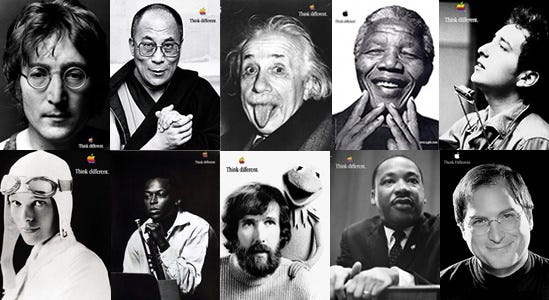
people who think different.
what is your blue box?
you’ve either got a story like that already; or you’re one thought away from starting one.
if reading this stirred something, i’d say lean into it.
as steve said, “the people who are crazy enough to think they can change the world, are the ones who do.”
collecting my own stories,
naman. :)